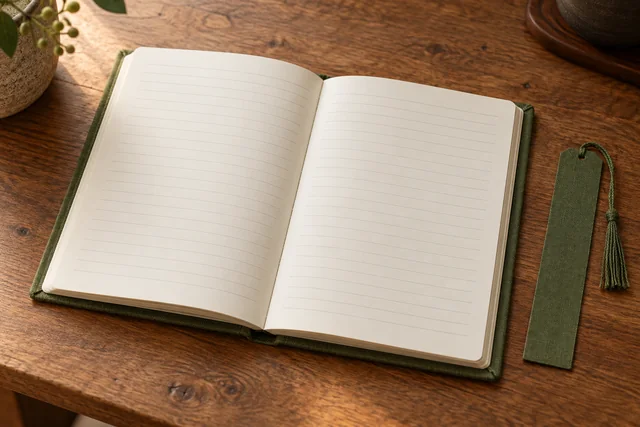
Writing a note in the margin
A marginal note can turn reading into a conversation with your future self. It need not be clever or complete. A question, a connection or a mark beside a sentence may be enough to help you return.
Choose the right place
Only write in a copy you own and are happy to mark. A separate notebook or removable slip works just as well for borrowed or treasured books. Keep the page reference with the thought so it remains useful later. The method should suit your relationship with the book, not someone else’s aesthetic of reading.
Write what caught you
Note a surprising word, an argument you do not follow or an image that connects with something outside the page. Distinguish your own idea from a quotation if you plan to use the note later. You do not need to capture every thought; too much annotation can interrupt the experience you are trying to remember.
Return after a little distance
Rereading your notes may reveal a changed opinion or a question that no longer feels important. Keep that difference visible. A reading record is interesting because it shows attention over time, not because it proves how many books you finished. One carefully kept observation can be more useful than a page covered in indistinguishable marks.